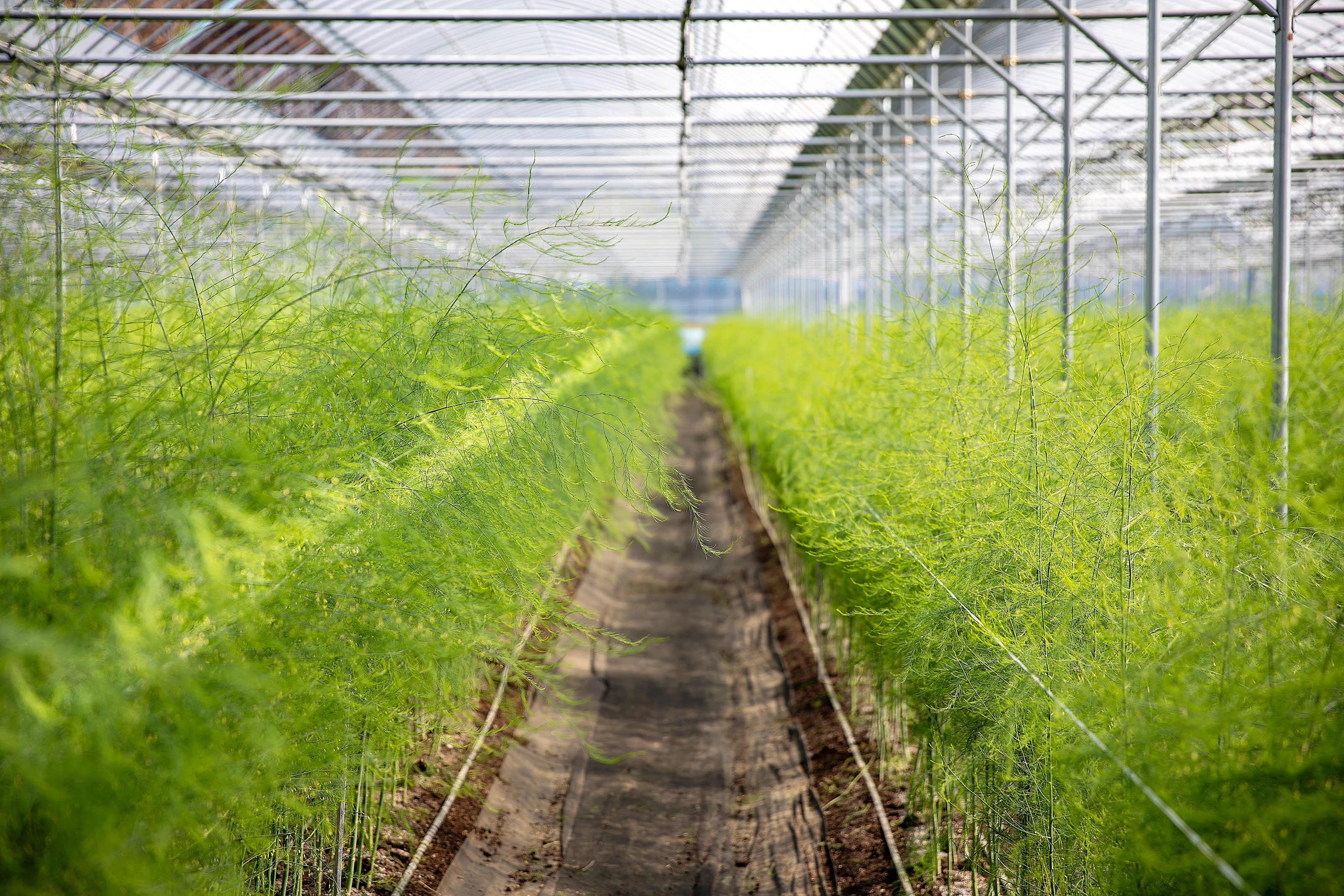
Why polytunnels are protected agriculture’s pragmatic future
The CEA industry is pouring investment into expensive greenhouse systems that serve the smallest part of the market. To us, the real opportunity is bringing intelligent optimisation to the biggest: polytunnels
Stand in a top-end Dutch greenhouse for 15 minutes and you'll hear the constant whirr of vents making tiny adjustments to keep conditions absolutely optimal.
Walk into an average polytunnel setup and it's a very different picture.
The hardware is there – motorised vents, irrigation systems, fans. But someone still needs to press the buttons. Or, as with most polytunnel farms I visit, they aren’t, because the cost of labour to keep up with the amount of manual adjustments needed to keep up with weather changes is unrealistic and prohibitively expensive.
Meanwhile, funding keeps flowing into further optimising precision agriculture in high-tech greenhouses.
Which means if you look at the CEA industry from the outside, you might assume the future is only in greenhouses - but that overlooks the huge role polytunnels play globally.
But my background is in finance. Which means I tend to look at this through a purely economic lens.
And from that perspective, there’s an overwhelming business case for maximising yield and quality from the polytunnel infrastructure that already exists – enabling the same level of precision management that exists for greenhouses, but without the same price tag.
CEA is solving for the exception, not the rule
Billions have flowed into high-tech greenhouse systems in the last decade.
Last year Equilibrium Capital closed the largest ever CEA fund in 2025, raising over $1 billion for high-tech greenhouse investments.
Agricultural robotics has also become a multi-million dollar market, with investments including further automating already-optimised greenhouse climate control as well as replacing grower responsibilities through robotic harvesting, seeding, or transplanting.
There’s no doubt that these systems deliver exceptional results.
But they're also completely inaccessible to most growers.
High-tech Dutch greenhouses cost upwards of £1 million per hectare. In some cases, significantly more.
Which explains why they’re a tiny proportion of total protected growing – at under £100,000 per hectare, polytunnels cost a tenth of what Dutch greenhouse systems do.
Total protected agriculture sits at 5.6 million hectares globally. Permanent greenhouse structures represent 500,000 hectares (9%) of that. The remaining 91% of covered farming happens in polytunnels that have received virtually no optimisation investment.
Why the neglect? Part of it is perception: new technology – the vertical farms, the robotic harvesters – makes a more exciting story than optimising what already exists. Part of it is assumption: a belief that polytunnels can't be optimised in the same way as greenhouses.
And part of it is economics: polytunnel growers operate on razor-thin margins, making any technology investment feel impossible.
But to me, that's backwards. The tighter the margins, the more critical optimisation becomes.
Polytunnels have already evolved massively
Polytunnels aren't just temporary structures anymore.
Twenty years ago, they were rotated between crops, moved multiple times per season, used only for flowering and fruiting periods, with very limited ability to control climate conditions.
Now they're often permanent structures with concrete foundations and a myriad of options to optimise conditions through advanced features like motorised roller vents, extended legs, or substrate gutters.
The hardware has evolved dramatically, giving polytunnel growers far more capability to control their growing environment.
In many cases, upgrading hardware alone can deliver incremental yield and quality improvements. But the greatest performance gains often come when strong structures are paired with data-driven control.
Polytunnel farms operate on razor-thin margins that keep getting thinner. With minimum wage rising, worker availability declining, and energy costs up, every investment has to deliver clear ROI. Many growers look at the hardware cost and decide it's not worth it for the incremental yield gains alone.
They're right to be skeptical. Because hardware alone doesn't unlock the full potential of the tunnels.
Why polytunnels are ready for optimisation
Even with advanced hardware in place, the performance gap between what's possible and what's happening in polytunnels is massive.
I’ve visited several berry growers who tell me they set their vents open at the start of each week if mild weather's predicted, or leave them closed if it's going to be cool. Then they stay that way unless something dramatic happens – sometimes for 2-3 weeks at a time.
They know what good conditions look like, they just can’t physically maintain them 24/7.
The vents are set at one fixed position for weeks at a time. Growers don’t have the labour on hand to keep adjusting them throughout the day – and even if they did, they wouldn’t be able to achieve the precise vent positioning for perfect airflow. So they compromise with a best guess.
In a greenhouse, you hear vents micro-adjusting every 30 minutes as conditions shift.
In polytunnels, they stay fixed for a week or more.
Bring extreme weather into the mix, and the risk is further heightened. One unexpected temperature swing can result in the loss of an entire tunnel’s worth of crops – manual management simply can’t react fast enough.
All of this results in compromised yields and compromised margins.
And with the thin margins of polytunnel farms, just a few percentage points of additional yield through better optimised conditions, combined with reduced labour costs, creates a delta that grows every season.
Over 4-5 years, that's the difference between a farm that's thriving and one that's struggling to stay viable.
And it changes what being a grower looks like too.
Instead of spending your time managing teams and running between sites, you're doing what you're actually good at: reading conditions to better understand what optimal looks like, applying your expertise to make strategic decisions, building better relationships with partners.
The question isn't whether polytunnels can be optimised the same way greenhouses are.
It's whether polytunnel growers can afford not to.
Software is the missing piece
But add the software layer on top of that hardware, and suddenly the ROI is a complete no-brainer.
Real-time insights that help you better understand what optimal conditions look like for your specific crops and site. Precise climate control that knows to position a vent at 27% instead of just "open or closed". Systems that learn from the data and continue finding ways to optimise yield over time.
While the hardware alone delivers an improvement. Add the software layer and you're looking up to a 20-30% total increase in performance.
And this isn't just about yield gains. It could be the difference between business survival and business failure.
Margins are thin, and labour costs are high. Achieving optimal climate conditions will increase profit margins, but doing that via manual labour is economically impossible (and physically impossible too – there's no switch on the wall for "open vent by 27%”).
Then there are the second-order problems: finding good workers, training them, covering for sickness, managing housing, dealing with off-season employment.
The path forward is achieving the same precision with dramatically less labour.
Yes, there are upfront technology costs.
But from a purely financial perspective, the ROI is straightforward: quick payback through labour reduction and yield improvement, then ongoing revenue gains that compound year after year as the system helps you learn, iterate, and increase yield over time.
Lose one tunnel's worth of crop to an unexpected frost or heatwave, and that single event would have paid for the software investment, possibly multiple times over.
And polytunnel growers are already seeing the upside. We're working with farms worldwide that have made this investment – they've seen the data, understood the ROI, and committed to managed polytunnels.
The farms that optimise early will strengthen their competitive position over time - particularly in labour-constrained, high cost markets.
In some cases, farms that don’t will be unable to compete with operations that have been compounding their advantages for years.Conversely, in many developing regions, the first priority may still be expanding protected acreage with simple, affordable tunnels - with optimisation layers introduced as markets mature.
It must fit the use case
Protected growing is not one size fits all. In some regions, the priority is expanding protected acreage quickly and cost effectively using proven tunnel systems. In others, rising labour costs and climate volatility are driving demand for automation and greater optimisation. The future is a spectrum - from simple tunnels to highly automated structures - and the opportunity is helping growers understand the options and progress along that spectrum at the right economic pace for their market.
Every protected cropping system has its place. The right solution depends on crop, climate, labour economics, infrastructure and commercial context.
Our role is to help growers select the appropriate system for their situation. Where an advanced structure is chosen, automation should be seriously considered to unlock its full potential but that does not render entry level systems obsolete.
The pragmatic path forward for protected farming
The infrastructure for the future of efficient protected agriculture already exists.
That grower I met in Herefordshire? His polytunnels already have the hardware. What he needs is the software that lets him use it effectively – so those vents can adjust throughout the day instead of staying fixed for weeks.
5.1 million hectares of polytunnels don't need to be replaced with expensive greenhouse systems. They need the data and intelligence to maximise the yield and quality from what's already there.
The real opportunity isn't in serving the 9% of the market that can afford £1 million per hectare.
It's beginning to bring precision climate management to the 91% that's been overlooked.
That's the pragmatic future of protected agriculture.