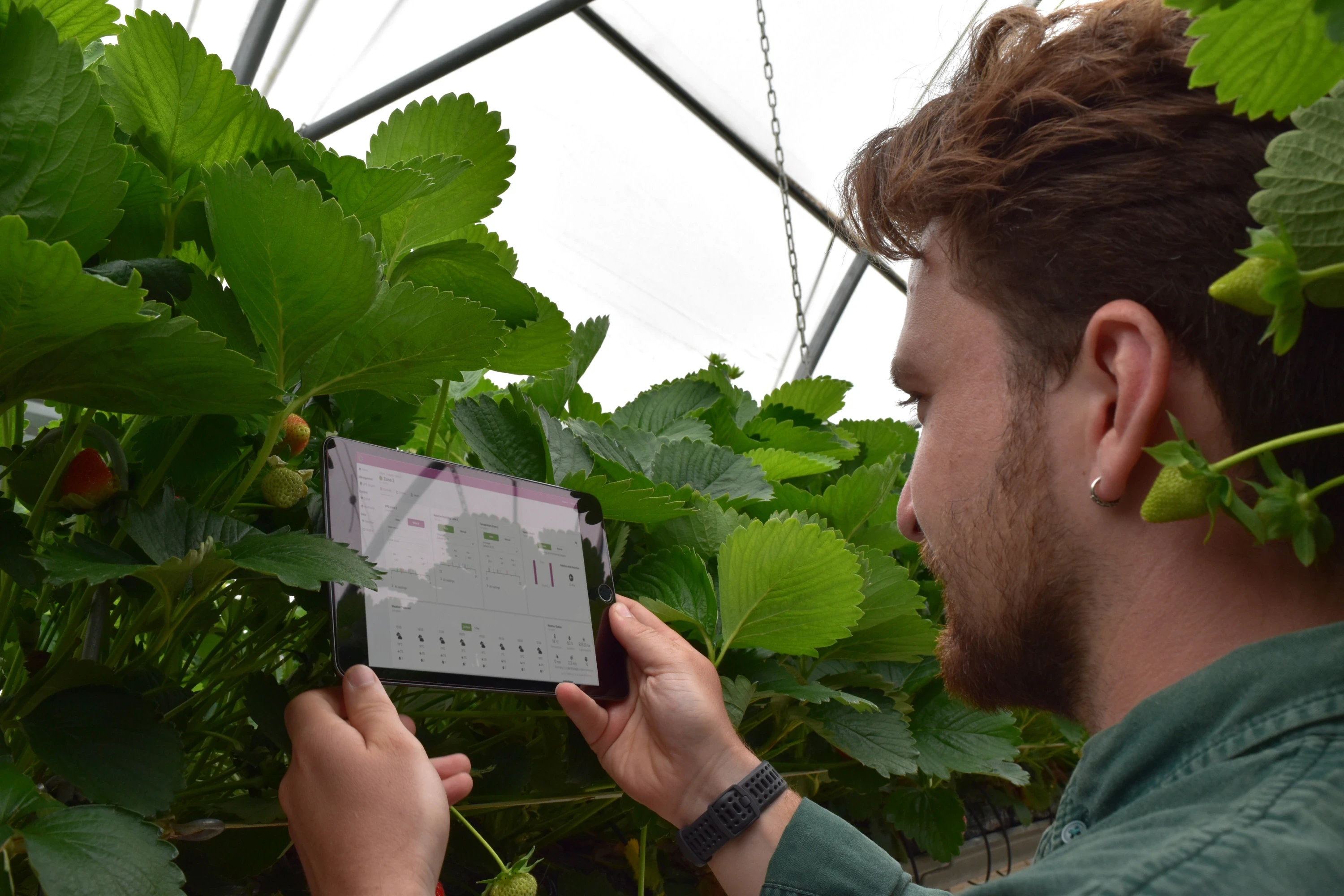
The best climate control systems for commercial polytunnel farming in 2026
Managing climate in commercial polytunnels is crucial – one week of unpredictable weather and subpar manual climate management could cost an entire season's Class 1 yield.
Managing climate in commercial polytunnels is crucial – one week of unpredictable weather and subpar manual climate management could cost an entire season's Class 1 yield.
But high-tech greenhouse systems are over-engineered and overpriced for polytunnel operations.
And traditional polytunnel controllers only offer basic set-and-forget functionality with no remote monitoring or real-time insights.
Which leaves you stuck between systems that are either too expensive and complex, or too basic to give you the control you actually need.
This guide reviews 14 leading climate control systems for commercial polytunnel farms in 2026. We'll cover what features matter most, which solutions fit different farm scales, and how to choose a system that practically helps to optimise your operation.
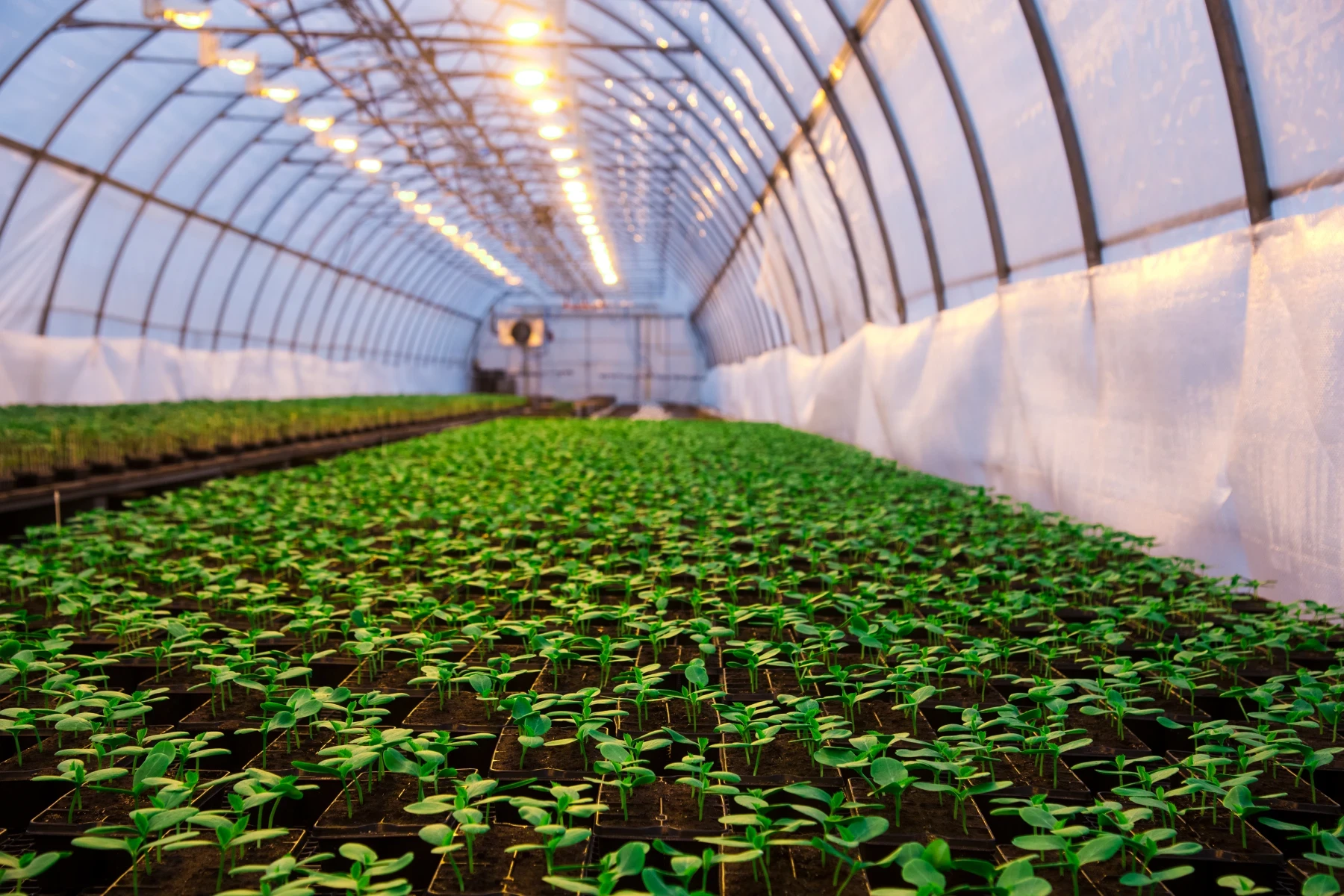
"When evaluating environmental control options for your polytunnels, look for systems that deliver reliable automation and actionable insights purpose-built for operations like yours – not overpriced high-tech solutions or basic set-and-forget controllers that don’t deliver the optimisation you’re looking for."
What makes an effective climate control system for commercial polytunnels?
The right climate control system depends on your specific needs – your farm size, crop types, current equipment, and how hands-on you want to be with day-to-day management.
But whether you're running two polytunnels or twenty, certain core capabilities separate the systems that actually work from those that create more problems than they solve.
When evaluating environmental control options for your polytunnels, look for systems that deliver reliable automation and actionable insights purpose-built for operations like yours – not overpriced high-tech solutions or basic set-and-forget controllers that don’t deliver the optimisation you’re looking for.
Here are 6 key factors to assess whether a system will actually work for your farm.
1. Real-time monitoring with actionable insights (not just data)
Real-time monitoring helps polytunnel growers stay on top of rapidly changing conditions across the farm – whether that's a sudden temperature spike, humidity building towards pest or disease risk, or irrigation that needs shifting due to soil moisture levels.
But also look for a climate control system that does more than give you dashboards full of raw monitoring data that you don't know how to interpret.
Knowing "VPD is 1.2 kPa" doesn't help unless the system helps you interpret what that means for your crops right now – like VPD is above optimal range and trending toward disease risk, or soil moisture is dropping and you need to adjust irrigation to avoid crop stress.
The best systems learn from your expertise on what optimal looks like for your specific crops and tunnels, then help you spot when conditions are drifting from those targets.
To ensure the environmental control system you're evaluating delivers actionable monitoring for your polytunnel farm, look for:
- Internal and external monitoring capabilities covering all relevant factors – temperature, humidity, VPD, light levels and PAR, rainfall, pH, EC, water levels and pressure, soil moisture
- Real-time data with no lag, so you can respond to changes as they happen
- Data from all those factors accessible in one unified dashboard, not scattered across separate sensors and platforms
- Remote monitoring from your phone or computer, not just on-farm access
- Historical tracking to understand patterns and optimise over time
- Action-based alerts and recommendations across devices, so you get insights on the go when decisions need to be made.
2. Automated control that handles routine work for you
Automated control frees you from constant manual adjustments to vents, heating, fans, and lighting throughout the day – taking those monitoring insights, and actioning them for you.
So, rather than spending hours opening and closing vents or tweaking irrigation schedules, control systems handle these routine tasks so you can focus on priorities that actually move your operation forward.
But climate automation should work with you, not replace you. The best systems act as intelligent support for your expertise – you’re able to set the targets and maintain oversight, while the system handles execution and alerts you when intervention is needed. Human skill, experience, and intuition remain irreplaceable; farm technology should enhance these strengths rather than attempt to replace them.
Automation also needs to be intelligent about how it operates, to maximise hardware lifespan and avoid maintenance headaches. For instance, a climate control system that opens and closes vents too frequently can prematurely wear out motors and covers.
To ensure the software you're evaluating has the right balance of automation and grower control, look for:
- Integration of monitoring and control in one system, so insights translate directly into action
- Advanced environmental controls for venting, temperature, lighting, and irrigation
- Automated control via target-setting where you define what optimal conditions should be throughout the day, and the system maintains them for you
- Remote management capabilities that let you control from anywhere, not just set-and-forget functionality
- Intelligent automation that balances environmental optimisation with hardware longevity
- Manual overrides and failsafes, so you're never completely dependent on the software if connectivity fails
- Compatibility with equipment you already have to avoid large additional hardware costs.
3. Integrated management of all climate factors (not just temperature)
Often, climate control for protected farms means a piecemeal approach – one sensor for temperature, another for humidity, a separate system for irrigation.
This fragmented setup leaves you juggling multiple platforms.
Plus, temperature, humidity, ventilation, and light don't operate in isolation – they constantly affect each other. Managing them separately through disconnected systems means missing critical interactions that drive both crop performance and disease risk.
To ensure the system manages climate holistically, look for:
- Unified platform managing all climate factors in one place, not fragmented systems requiring you to switch between separate dashboards for temperature, humidity, irrigation, and other variables
- Multi-variable monitoring and control covering temperature, humidity, VPD, light, CO2, and soil moisture
- Ability to set different target conditions for different crops or growth stages or tunnels
- Coordinated control – adjustments to one factor automatically account for impacts on others
- Clear dashboards showing how factors interact, not just individual readings.

4. Built for polytunnels (not adapted from elsewhere)
You need systems built for the unique challenges of commercial polytunnel farms.
High-tech greenhouse environmental control systems deliver sophisticated monitoring and automation – but they're built for large-scale glasshouse operations with different infrastructure, budgets, and operational needs than polytunnels.
Traditional polytunnel controllers, on the other hand, offer only basic set-and-forget functionality with no remote monitoring or insights.
To ensure the system is genuinely designed for operations like yours, look for:
- Systems explicitly designed for polytunnels, not super high-tech greenhouse automation software
- Understanding of your structure type, like the need for roll-up side vent control in polytunnels
- A team who understand polytunnel farm challenges, not just generic agriculture.
5. Proven reliability and industry validation
With tight margins in protected growing, if you’re investing in climate control software, you need a system that will work consistently, by a company that will still be around in ten years time, with a support team on hand if things go wrong.
Industry validation through partnerships with established names like Haygrove or Driscoll's signals that a provider has been vetted and trusted by others in your position.
To evaluate whether a system and provider are genuinely reliable, look for:
- A team with lived experience in protected growing, horticulture, or agronomy – not just technology
- Proven deployments with growers you know and can speak to, not just promises
- Partnerships or endorsements from established industry players you recognise
- Clear company stability, including backing from credible investors or established parent companies
- Manual failsafes, offline functionality, and backup systems, so your farm never depends entirely on connectivity.
6. Practical usability: setup, ease of use, support, and ongoing improvements
A climate control system should be straightforward to implement, backed by reliable support, and continuously improved based on real grower needs – not just sold once and left to become outdated.
The best systems are intuitive from day one, supported by people who understand the unique challenges of polytunnel farms, and actively developed with regular updates that address actual challenges growers face.
Without this, you risk investing in technology that either frustrates you daily or becomes obsolete within a few years.
To ensure the system will work well for you long-term, look for:
- Simple implementation with clear guidance and minimal disruption to operations
- Comprehensive onboarding with hands-on training tailored to your crops and tunnel configuration, backed by clear documentation for day-to-day operation
- Support team with polytunnel growing expertise, not generic software support
- Fast response times during critical periods with clear escalation paths
- Intuitive interface that works on the go (including a mobile log-in option), without steep learning curves to understand what you’re looking at
- Unified dashboards showing all monitoring and control in one place, not scattered across separate platforms
- Regular software updates and improvements driven by real grower feedback and industry understanding, keeping the system rather than locked into outdated technology.
| Platform | Key Strength | Best For |
|---|---|---|
Ostara | Integrated monitoring, control, and automation with actionable insights that drive intelligent optimisation, purpose-built for polytunnel farms | Commercial polytunnel growers wanting simple, reliable control and monitoring without enterprise complexity or cost |
TomTech | 35+ years experience and strong engineering support | UK growers who need reliable on-site climate control but don't require remote management |
Wadsworth Controls | Proven scalable systems from basic to advanced with cloud-based remote access | North American small-to-mid operations wanting scalable systems with cloud access |
Autogrow | Flexible modular approach managing up to 8 zones from single controller | Small-to-mid commercial operations wanting modular climate and fertigation control |
Ridder | Integrated hardware and software solutions from a single established provider | Greenhouse or polytunnel growers wanting integrated hardware and software solutions from an established global provider |
Grow Director | Wireless plug-and-play installation with AI-powered climate optimisation | Commercial operations wanting wireless, modular automation with AI-powered optimisation |
Agrilogiq | Modular polytunnel control software with separate climate, irrigation, and fertigation modules | Growers wanting full-stack polytunnel automation with integrated hardware and software systems |
Growlink | Cloud-based platform with advanced crop steering for high-value crops | Mid-market commercial cannabis operations wanting modern cloud automation with crop steering capabilities |
Soil Moisture Sense | 30+ years of UK irrigation expertise with specialist focus on water management | UK growers looking for irrigation monitoring, decision support, and automation |
Way Beyond | AI-driven predictive analytics for irrigation optimisation with proven water efficiency results | Commercial seed producers wanting insights without equipment automation |
Aroya | Research-grade sensor accuracy for precision substrate monitoring and crop steering | Commercial cannabis and high-value crop growers prioritising precision substrate monitoring and crop steering |
Netafim | Global leader in precision irrigation technology with comprehensive greenhouse project delivery | Large commercial growers planning new greenhouse builds where irrigation is the primary concern |
Argus Controls | Highly customisable enterprise system for complex multi-zone commercial operations | Large North American operations requiring highly customisable multi-zone climate control |
Priva | Industry-leading enterprise platform with sophisticated energy optimisation | Large-scale European commercial greenhouse operations requiring enterprise-grade climate control with energy optimisation |
1. Ostara
Best for: Polytunnel growers wanting simple, reliable control and monitoring without enterprise complexity or cost.
Ostara is a UK-based climate control system purpose-built for polytunnel farms by a team with deep protected growing expertise. Ostara delivers a full-stack solution that enables you to monitor conditions in real-time, control equipment remotely, and automate routine adjustments – working with your existing equipment to continuously optimise conditions and free up your time from constant manual climate management, whilst keeping you in full control with the ability to override and intervene whenever needed.
Key features:
- All-in-one platform combining monitoring, control, and automation
- Real-time environmental monitoring with actionable insights and alerts
- Hardware-agnostic, compatible with existing farm equipment
- Remote management via intuitive mobile app and web dashboard
- Adaptive system that learns your operation's patterns and refines recommendations over time.
Key strengths:
- Actionable and real-time insights, not just monitoring data: Rather than raw monitoring data you need to interpret, Ostara translates environmental readings into clear guidance on what conditions mean for your crops and what action to take – as Christi Marmandiu, International Technical Lead at Haygrove puts it: "You don't need to go and check if the tunnels are right, you just have it with you on your phone at all times."
- Control and automation that enhances your expertise: You set the targets and maintain control whilst Ostara handles routine execution, alerting you when intervention is needed. As Freddy Cavieres, R&D Engineer at Haygrove notes: "Ostara enables me to make faster decisions, save valuable time, and keep crops healthy – driving productivity and sustainability across every hectare".
- Continuous learning and intelligent optimisation: The system analyses what's working across your operation and feeds those insights back to you. This creates a bidirectional learning process: the system gets smarter about your farm over time, whilst you build deeper understanding of what drives optimal performance for your specific crops and polytunnels – both you and the system are able to iteratively refine your approach season after season.
- Unified platform, not piecemeal solutions: Unlike juggling separate sensors for temperature, standalone humidity monitors, and disconnected control systems, Ostara combines monitoring, control, and automation in one unified platform – eliminating the fragmentation that leaves you switching between multiple dashboards and missing how climate factors interact with each other.
- Scalable approach that grows with your confidence: Start with Ostara Sense for monitoring and insights, then add automated control when you're ready - or trial with a few tunnels before scaling to your entire operation. No need to commit to full automation upfront or replace systems as you expand.
- Purpose-built for polytunnels by polytunnel specialists: Unlike greenhouse systems adapted for polytunnels or generic automation platforms, Ostara is solely focused on solving the unique challenges of commercial polytunnel farms.
- Established expertise: Having spun out from Lettus Grow means an experienced team, expert advisors like James Waltham, and existing partnerships with industry leaders like Haygrove and Chambers.
- Simple installation with expert support: Setup from a team who understand protected growing, with ongoing guidance to help you optimise – as Molly Allington, CEO at Albotherm notes: "We chose Ostara for its ease of use. We're a small team, so efficiency is key."
- Affordable pricing to guarantee ROI: With the option to work with us for a trial period first to check the value-add before any full commitments.
TomTech
Best for: UK growers who need reliable on-site climate control with local engineering support.
TomTech is a UK-based greenhouse control system provider offering climate and irrigation management through physical control panels and touchscreen interfaces, with 35+ years of experience and strong local engineering support.
Key features:
- Multi-zone climate monitoring and control for temperature, humidity, light, CO2, pH, and nutrients
- Physical touchscreen control panels for on-site climate management
- Environment Manager software for viewing data on networked PCs.
Key strengths:
- Trusted name with 35+ years of proven reliability in UK protected growing
- Local engineering support with established UK service network
- Comprehensive maintenance contracts available with scheduled engineer visits and sensor calibration.
3. Wadsworth Controls
Best for: North American small-to-mid operations wanting scalable systems with cloud access.
Wadsworth Controls is a US-based company with 60+ years of experience, offering a range of greenhouse automation systems from basic to more advanced and customisable systems.
Key features:
- Range from basic (STEP Up) to advanced (Seed, VersiSTEP) systems – allowing expansion as operations grow
- Cloud-based remote monitoring and control via Wadsworth.Cloud
- Multi-zone climate control for temperature, humidity, and irrigation
- Weather station integration for automated climate responses.
Key strengths:
- 60+ years of proven reliability in North American horticulture (founder in Horticultural Hall of Fame)
- Established brand that's a known, trusted choice for growers
- Cloud-based remote access for on-the-go management (additional cost).
4. Autogrow
Best for: Small-to-mid commercial operations in New Zealand wanting modular climate and fertigation control.
Autogrow is a New Zealand-based company offering modular greenhouse automation through their MultiGrow system, managing climate and fertigation for up to eight different growing zones from a single controller with web-based remote access.
Key features:
- MultiGrow modular system managing up to 8 zones from single controller
- Web-based remote access from any browser
- Climate and fertigation control in one system
- Automated daily data backups.
Key strengths:
- Flexible modular approach suits operations with multiple crop types or growing zones
- Web-based interface works without specific software installation
- Reliable data backup preventing loss of settings and history.
5. Ridder
Best for: Greenhouse or polytunnel growers looking for integrated hardware and software solutions from a single provider.
Ridder is a Dutch company with 70+ years of experience offering comprehensive greenhouse and polytunnel solutions, combining their hardware products (climate screens, drive systems, water treatment) with their Process Automation software platform for climate, water, and energy control.
Key features:
- Real-time monitoring with smart sensors and automated system responses
- HortiMaX climate computer systems integrating climate, irrigation, and energy control
- Cloud-based remote access via mobile app and web interface
- Multi-zone control for managing multiple compartments independently
- Scalable and modular systems allow expansion as operations grow.
Key strengths:
- 70+ years of proven reliability with established global presence and horticultural expertise
- Full-service provider offering matched hardware and software designed to work together seamlessly
- Unified platform bringing monitoring, control, and automation together for climate, water, and energy management
- Solutions for both glass greenhouses and polytunnel operations.
6. Grow Director
Best for: Commercial operations wanting wireless, modular automation with AI-powered optimisation.
Grow Director is an Israeli greenhouse automation platform offering fully wireless, modular design with AI-driven optimisation for climate, irrigation, fertigation, and lighting.
Key features:
- Fully wireless, modular design with plug-and-play installation
- AI-driven optimisation of environmental conditions
- Controls climate, irrigation, fertigation, and lighting from unified system
- Remote management via mobile app with free AI Agronomist tool for disease diagnosis.
Key strengths:
- Wireless design eliminates complex wiring and simplifies installation
- Modular approach allows starting small and scaling as needed
- AI-powered disease diagnosis and performance analytics included.
7. Agrilogiq
Best for: Growers wanting modular control of different environment factors, and integrated hardware and software systems.
Agrilogiq is a South African agricultural automation provider offering their ZoneLogiq precision greenhouse control software for polytunnels and greenhouses. The platform provides visibility and control through separate software modules for climate, irrigation, and fertigation, working with their integrated third-party hardware systems.
Key features:
- ZoneLogiq cloud-based platform with remote access via mobile and desktop
- Separate modular software for climate control, irrigation control, and fertigation control
- Weather forecasting and environmental monitoring
- Data-driven insights for informed decision-making
- Integration with third-party hardware components.
Key strengths:
- Purpose-built for polytunnel and greenhouse operations
- Modular approach allowing growers to select specific control functions needed
- Full-stack solution combining third-party hardware installation with software control
- Real-time data and remote management capabilities.

Growlink
Best for: US operations wanting modern cloud automation with crop steering capabilities.
Growlink is a US-based greenhouse automation platform offering cloud-based control for climate, irrigation, and nutrients, specialising in cannabis cultivation.
Key features:
- Cloud-based platform with comprehensive automation controller of temperature, humidity, CO2, ventilation, irrigation, and nutrients
- Crop steering capabilities with substrate monitoring (moisture, EC)
- AI Copilot feature and mobile app for remote management.
Key strengths:
- Modern cloud-first platform with intuitive mobile interface
- Integrated monitoring and control in single platform
- Strong track record in high-value crop cultivation including cannabis.
9. Soil Moisture Sense
Best for: UK growers looking for irrigation monitoring and automation specifically.
Soil Moisture Sense is a UK-based company with over 30 years of experience providing crop water management services. Their software platform offers soil moisture sensing, decision support, and irrigation automation.
Key features:
- Soil moisture monitoring systems tracking water infiltration, crop use, and root development
- Real-time data display via online platform with daily email updates
- Expert data analysis and decision support from experienced agronomists
- Irrigation automation with configurable set points (up to three per day).
Key strengths:
- Over 30 years of crop monitoring expertise
- Specialist focus on irrigation optimisation and water management
- Strong emphasis on data interpretation and agronomic support, not just sensor data
- Simple, reliable irrigation automation focused on scheduled watering.
10. Way Beyond
Best for: Commercial berry and seed producers wanting monitoring insights without control abilities
Way Beyond provides monitoring and insights platforms for protected cropping with wireless Bluetooth sensor networks delivering detailed climate data and predictive analytics, focusing on informed decision-making rather than equipment automation.
Key features:
- FarmRoad unified dashboard combines climate data across multiple farms with AI-powered predictions
- GrowPilot free AI app delivering daily weather forecasts, irrigation tips, and crop risk alerts via WhatsApp
- Wireless Bluetooth sensor networks monitoring temperature, humidity, VPD, CO2, light, and soil moisture.
Key strengths:
- Strong focus on actionable insights and digital agronomy rather than raw data
- AI-driven predictive analytics for irrigation, pest/disease risk, and yield forecasting
- Global customer base including Costa Group, Bayer, Syngenta, African Blue
11. Aroya
Best for: Commercial cannabis and high-value crop growers prioritising precision substrate monitoring and crop steering.
Aroya (by Addium) is a cultivation platform focused on precision monitoring for crop steering, centring on research-grade sensors for substrate and climate monitoring to provide detailed data for informed crop steering decisions.
Key features:
- TEROS ONE substrate sensor with high-precision EC measurements for root zone monitoring
- CLIMATE ONE aspirated climate station measuring temperature, humidity, VPD, and CO2
- AROYA software platform with cultivation metrics, crop steering tools, and historical data analysis.
Key strengths:
- Research-grade sensor accuracy (adapted from NOAA and US Weather Service technology)
- Popular in cannabis cultivation with proven results in high-value crops
- Strong focus on crop steering methodology with educational resources
12. Netafim
Best for: Large commercial growers planning new greenhouse builds, where irrigation is the primary concern.
Netafim is a global irrigation company specialising in precision irrigation and fertigation systems for protected cropping, partnering with Priva for climate automation technology.
Key features:
- World-leading precision drip irrigation and fertigation systems
- Full greenhouse project delivery from design through commissioning – including selling greenhouse infrastructure (heating, cooling, fogging, screens)
- Integration with Priva for climate control capabilities.
Key strengths:
- Global leader in irrigation technology with proven systems worldwide
- Comprehensive greenhouse project management from feasibility to commissioning
- Strong expertise in water and nutrient management
- Suitable for greenhouse growers planning new builds or major infrastructure upgrades.
13. Argus Controls
Best for: Large North American operations requiring highly customisable multi-zone climate control.
Argus Controls is a Canadian company offering greenhouse automation systems with their flagship Argus Axia platform, known for extensive customisation and scalability for complex commercial growing operations.
Key features:
- Argus Axia flagship system with fully customisable, scalable design
- Multi-zone control managing multiple zones and rooms independently
- Proprietary control algorithms for automated lighting, watering, and feeding cycles.
Key strengths:
- Extensive flexibility allowing growers to configure systems to exact specifications
- Strong presence in North American commercial operations and research institutions
- Comprehensive support throughout implementation and operation.
14. Priva
Best for: Large-scale European commercial greenhouse operations requiring enterprise-grade climate control with energy optimisation.
Priva is a Dutch greenhouse technology company with 60+ years of experience, offering comprehensive climate control systems for commercial operations with their flagship Priva Connext system integrating climate, irrigation, lighting, and energy management.
Key features:
- Priva Connext to manage climate, water, energy, and lighting in integrated system
- Cloud-based Priva Operator for remote monitoring and control via mobile or desktop
- Advanced energy optimisation including 24-hour gas strategy and buffer management
- Comprehensive sensor and weather forecast integration for predictive control.
Key strengths:
- Industry-leading platform with proven track record in large commercial operations globally
- Sophisticated energy management reducing operational costs through intelligent algorithms
- Complete integration across all greenhouse systems (climate, irrigation, lighting, energy)
- Strong focus on sustainability and resource efficiency.

Why Ostara is the best climate control system for polytunnel farms
If you're a polytunnel grower looking for reliable automation without enterprise complexity, you'll find Ostara provides the optimal mix of integrated monitoring and control, proven industry partnerships, and hands-on support from people who understand protected growing.
Unlike high-tech greenhouse systems over-engineered for your needs or basic controllers offering set-and-forget functionality, Ostara works with you to continuously optimise your operation. The system translates real-time data into actionable insights, then either alerts you to make informed decisions or automates routine adjustments – keeping you in control whilst the software handles the execution.
Here's what you can expect when working with Ostara:
- Built for polytunnel, not adapted from elsewhere: Unlike enterprise systems designed for high-tech glass or basic set-and-forget controllers, Ostara is purpose-built for the specific needs and economics of polytunnel farms.
- Actionable insights that support continuous optimisation: Rather than dashboards of raw data you need to interpret, Ostara delivers clear guidance on what conditions mean for your crops and what action to take – then either executes automatically or alerts you to intervene, creating an interactive process that learns and improves season after season.
- Control that works with you, not instead of you: You set the targets and maintain oversight whilst the system handles routine execution and alerts you when intervention is needed, acting as an intelligent autopilot that enhances your expertise rather than attempting to replace it.
- Hardware-agnostic and built to be fixable: Works with your existing farm equipment using standard off-the-shelf components, so any engineer can fix issues rather than needing to invest in new hardware or find specialist support when things go wrong – with support on hand when you need it.
- Low-risk entry and scalable growth: Start with Ostara Sense for monitoring, then add control as you build confidence, or trial with a few tunnels and scale to your entire operation.
- Retrofit-friendly: Designed for both new builds and existing infrastructure, fitting into operations without requiring complete rebuilds.
- Trusted by industry leaders: Ostara has formal partnerships in place with industry leaders like Haygrove and Chambers, with all existing trial partners having committed to full deployment after proving value.
- Proven outcomes from existing projects: Trials with Haygrove show 60 hours labour saved per month per hectare and 25% more time with crops under optimal VPD.
- Partnership model and support: Hands-on onboarding, in-person training, and always-accessible support from a team who understand protected growing.
As Christi, International Technical Lead at Haygrove summarises: “Ostara has enabled us to make better decisions for the plants and maximise our return-on-investment by having roll-up venting connected to our sensors. Now Ostara might cause our vents to operate two or three times every hour to keep conditions optimal – the manual labour needed to achieve that would be a huge, huge cost.”
So, to wrap up, which is the right climate control system for your farming operation?
The right climate control system depends on your specific farm. As you evaluate the options, ask yourself:
What's your biggest pain point right now? Labour costs eating into margins, disease pressure from humidity issues, or temperature swings stressing crops and damaging Class 1 yield?
What's your current setup? How many tunnels do you operate, what equipment do you already have, and are you planning to expand in the next few years?
How hands-on do you want to be? Are you looking for monitoring with alerts so you can make informed decisions, or full automation that manages routine adjustments for you?
What's your comfort level with technology? Do you want something straightforward that works out of the box, or are you comfortable with more complex systems that offer deeper customisation?
How important is expert support? Especially if you're new to automation, look for providers who understand protected growing challenges and can guide you beyond just technical setup – people who recognise when a technical issue is actually an agronomic optimisation opportunity.
Sign up to our newsletter for updates
Sign up to our newsletter for updates
What is a climate control system in protected farming?
A climate control system monitors and manages environmental conditions in protected growing environments like polytunnels and greenhouses. These systems track factors like temperature, humidity, VPD, light levels, and soil moisture, then either alert you to take action or automatically adjust equipment like vents, heating, irrigation, and lighting to maintain optimal growing conditions.
What's the difference between climate control and monitoring systems?
Monitoring systems track environmental conditions and provide data or alerts, but you still need to manually adjust vents, heating, or irrigation based on what you see. Climate control systems go further by automatically managing equipment to maintain the conditions you've set, handling routine adjustments without manual intervention. Some systems offer both capabilities, letting you start with monitoring and add automated control as you build confidence.
What to look for in a protected agriculture climate control system?
Focus on four key areas:
- Systems that deliver actionable insights (not just raw data)
- Systems that offer reliable control and automation to reduce manual labour across all climate factors (not just monitoring)
- Systems genuinely built for the kind of protected farm you run (not overpriced high-tech greenhouse solutions if you manage polytunnels)
- Systems with the support you need long-term – expert support from trusted teams who understand protected growing.
What is the best climate control system for a polytunnel farm?
The best climate control system is the one that meets the specific needs of your polytunnel farm – offering the monitoring, control, and automation that will enable you to optimise yield, whilst aligning with the equipment and budget you have.
For instance, Ostara offers purpose-built solutions for polytunnels that deliver integrated monitoring and control without enterprise complexity or cost. Unlike basic controllers offering set-and-forget functionality, Ostara translates real-time data into actionable insights and automates routine adjustments whilst keeping you in control. The hardware-agnostic design works with your existing equipment, making it affordable to implement and easy to scale from monitoring alone to full automation as your confidence grows.
What's the ROI timeframe for automated climate control?
ROI depends on your current labour costs, crop value, and yield improvements, but many operations see value within the first growing season.
The value comes from two sources: labour savings if you're already managing climate manually, or yield improvements through optimisation that's impossible to achieve manually if labour constraints limit your current management. Systems preventing even one season's crop loss can justify their cost immediately.
Haygrove's trials using Ostara show 60 hours of labour saved per month per hectare, whilst crops spent 25% more time under optimal VPD – improving both labour efficiency and yield quality. As Christi from Haygrove notes, Ostara adjusts vents 2-3 times per hour: "the manual labour needed to achieve that would be a huge, huge cost."
Do polytunnels need ventilation?
Yes, polytunnels need effective ventilation to prevent heat build-up, manage humidity levels, and maintain air circulation that reduces disease pressure. Without proper ventilation, temperatures can spike dangerously during sunny weather even in spring and autumn, and humidity can create conditions for botrytis and other fungal issues.
Automated ventilation through climate control systems like Ostara can help you respond to changing conditions continuously – adjusting vents multiple times per hour to maintain optimal temperature and humidity levels, something that's impossible to achieve with manual vent management alone.